Cement tech is evolving rapidly. New innovations are changing the landscape of construction. These advancements are not only improving efficiency but also addressing environmental concerns.
In recent years, researchers have made breakthroughs in sustainable cement production. For instance, using waste materials can reduce carbon emissions significantly. This demonstrates a vital shift toward greener practices in the industry. Some companies are even experimenting with carbon capture technology. However, these methods are still in their infancy and require further development.
As we explore the top 10 innovations in cement tech, it's crucial to recognize the potential pitfalls. Some technologies may not be scalable or cost-effective yet. The balance between innovation and practicality remains delicate. Exploring these advancements can provide insights into the future of construction materials. Each innovation carries its promise and challenges, inviting reflection on what lies ahead.

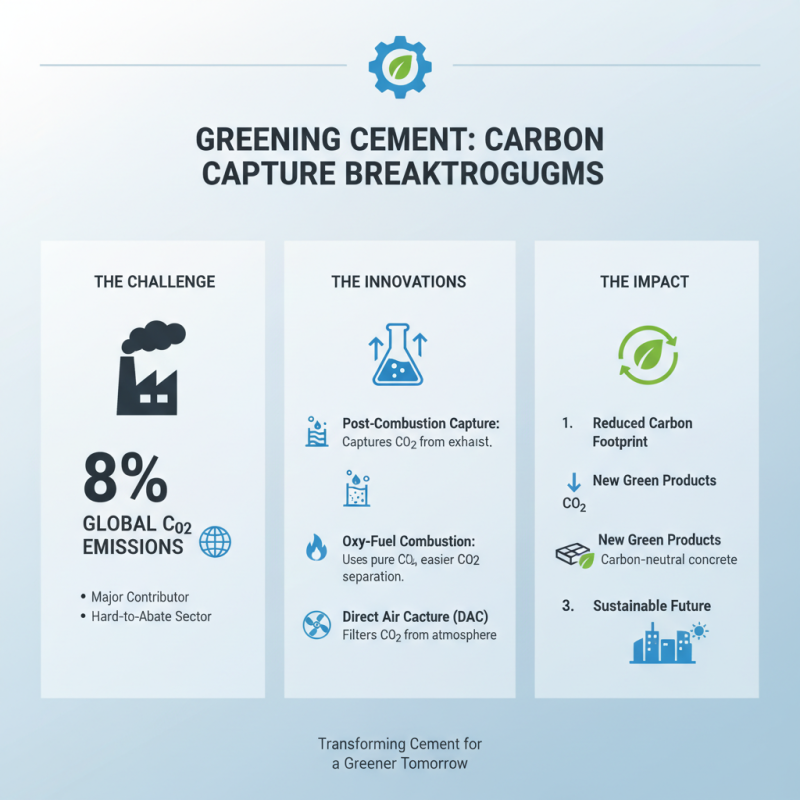
Recent advances in carbon capture technologies are transforming cement production. Cement is a major contributor to global CO2 emissions, accounting for about 8% of the total. Yet, new innovations are emerging to tackle this challenge.
One promising approach is direct air capture (DAC). This technology extracts CO2 directly from the atmosphere. By integrating DAC with cement production, facilities can potentially reduce CO2 emissions significantly. Research shows that combining DAC with traditional methods can capture up to 90% of emissions from cement plants.
Another interesting technology is carbon mineralization. This involves converting CO2 into stable minerals. It can be done using waste materials from other industries. Some studies estimate that this method could reduce emissions by 15% in the cement sector. Challenges remain, particularly in scaling these technologies. Effective implementation requires investment and infrastructure improvements. The path forward is not straightforward, but the potential benefits are crucial for sustainable development in the cement industry.
The construction industry is facing pressure to reduce its carbon footprint. Traditional cement production contributes significantly to greenhouse gas emissions, accounting for nearly 8% of global CO2 emissions. The shift towards alternative clinker materials is crucial. These materials include fly ash, slag, and limestone, which can replace a portion of traditional clinker.
Utilizing waste products like fly ash can reduce emissions by up to 30%. This method enhances the overall sustainability of cement production. According to recent studies, using alternative materials can lower energy consumption by 20% during manufacturing. However, challenges remain. The availability of quality alternative materials is inconsistent, which leads to variability in performance.
Moreover, transitioning to alternative clinkers may affect the durability of concrete. Some mixtures result in slower curing times, impacting construction scheduling. While the benefits are clear, industry players must address these trade-offs. Continuous research is essential to improve the performance of alternative materials and ensure reliable supply chains. The journey toward greener cement technology is complex but necessary for a sustainable future.
| Innovation | Description | Impact on Carbon Footprint | Potential Alternatives |
|---|---|---|---|
| Geopolymer Cement | A type of cement made from aluminosilicate materials that can significantly reduce CO2 emissions. | Reduces emissions by up to 80% compared to traditional Portland cement. | Fly ash, slag, natural pozzolans. |
| Calcined Clay | Using calcined clay as a supplementary cementitious material. | Can lower clinker use by 30% and thus lower CO2 emissions. | Natural clay deposits. |
| Carbon Capture and Storage | Technologies that capture CO2 emissions from cement production. | Potential to capture up to 90% of emissions from cement plants. | Not applicable. |
| Limestone Calcined Clay Cement (LC3) | A blend of clinker, calcined clay, and limestone that reduces CO2 emissions. | Can reduce CO2 emissions by 30% compared to traditional methods. | Limestone, calcined clays. |
| Use of Recycled Materials | Incorporating recycled concrete and other materials into new cement. | Lowers the demand for clinker, reducing emissions proportionally. | Recycled aggregates. |
| Bio-based Admixtures | Using biological materials to enhance the properties of cement. | Helps in reducing the overall material needed, lowering emissions. | Agricultural wastes. |
| Smart Cement | Cement embedded with sensors for real-time monitoring. | Improves building durability, reduces need for repairs and resource use. | Not applicable. |
| 3D Printing with Cement | Using cement mixtures for additive manufacturing in construction. | Reduces waste and material usage, lowering emissions. | Custom cement compounds. |
| High-Efficiency Kilns | Kilns designed to optimize fuel use and reduce emissions. | Can cut emissions by up to 40% compared to traditional kilns. | Alternative fuels. |
Digitalization is transforming cement manufacturing processes. Innovative technologies are enhancing efficiency and reducing costs. Sensors and IoT devices collect real-time data. This information helps in optimizing equipment and streamlining operations. The result is improved quality and reduced waste. However, not all companies are ready for this change.
Tips: Start small. Implement digital tools gradually. Train your staff on new technologies. Adaptation is key to success. Monitor progress closely to understand what works.
Advanced analytics also play a crucial role. They provide insights into production patterns and equipment health. Companies can predict maintenance needs and avoid unexpected downtimes. Still, some manufacturers struggle with data management. Ensuring cybersecurity is vital. Trust in digital platforms must be established.
Tips: Keep data organized. Invest in cybersecurity measures. Regularly review your digital strategy to stay updated. Be open to adjustments based on feedback. Innovation comes with challenges, but the potential rewards are immense.
Cement technology is evolving rapidly. Innovations in additives are at the forefront of this change. These additives enhance both durability and performance. They can improve resistance to environmental challenges. For example, some additives help combat water infiltration. This is crucial for structures exposed to heavy rain.
Certain additives improve bond strength. This leads to stronger, longer-lasting concrete. As cities grow, the demand for durable materials rises. However, not all additives produce the desired results. Some may affect workability or setting time, creating challenges. Balancing performance with practicality is key.
Recent research shows that organic additives can reduce carbon footprint. They offer a sustainable alternative. Yet, the effectiveness varies widely. Engineers must choose wisely based on specific project needs. It’s essential to consider local conditions. Each innovation presents unique benefits and potential drawbacks. Embracing this complexity is vital for future progress in cement technology.
Cement production has a significant impact on the environment. A focus on sustainable practices is essential. Waste utilization is one area gaining attention. Many companies are exploring ways to incorporate waste materials into cement production. This reduces landfill use and provides alternative materials. For instance, fly ash from power plants can replace part of the cement mix.
Many innovations aim to reduce emissions. Using industrial by-products can help to cut down CO2 output. It is crucial to assess the quality of these materials. Not all waste is suitable as a substitute. Some materials may not provide the desired strength or durability.
**Tip:** Research local waste sources. Collaborate with nearby industries. Each partnership can increase the amount of waste diverted from landfills.
Another important aspect is the economic viability of these practices. Incorporating waste materials can lower costs in some cases. However, careful calculations are necessary. Savings may vary based on availability and quality. Testing blends is essential to ensure performance meets industry standards.
**Tip:** Start small. Implement trial runs with various waste materials. Monitor closely to identify opportunities for improvement. Adjustments can lead to a more sustainable and efficient production process.