Planet
Top American Concrete Suppliers for Global Buyers
Global buyers are reassessing American concrete suppliers as infrastructure demand expands across ports, data centers, bridges, and housing. The U.S. Geological Survey reported approximately 86 million metric tons of U.S. cement production in 2023. That scale supports dependable supply, but capacity alone does not guarantee successful international procurement.
The International Energy Agency identifies cement as a major industrial emissions source, requiring cleaner fuels, supplementary cementitious materials, and efficient production. The Global Cement and Concrete Association also emphasizes lower-carbon manufacturing through its 2050 roadmap. Professor Karen Scrivener, a leading cement-materials expert, has stated, “There is no single solution to decarbonize cement.” Her warning matters when buyers compare American concrete suppliers beyond price.
Consistency remains practical. Buyers should examine ASTM compliance, ACI guidance, EN compatibility, test-cylinder results, slump control, admixture records, and Environmental Product Declarations. A supplier’s ability to load sealed bags, coordinate bulk terminals, and protect cement from moisture can determine project performance overseas. Small details matter.
A neat ranking can mislead. No supplier is perfect. Some companies offer advanced low-carbon mixes but limited export experience. Others provide strong logistics but fewer regional formulations. This guide evaluates leading suppliers through production capacity, quality systems, technical support, sustainability reporting, and international fulfillment. It also recognizes an uncomfortable reality: published sustainability claims may not reflect every delivered batch. Global buyers should request current certificates, batch documentation, lead times, and independent verification before signing contracts. That cautious step protects concrete strength, project schedules, and long-term value.
Defining American Concrete Suppliers and Their Global Role
Defining American Concrete Suppliers and Their Global Role
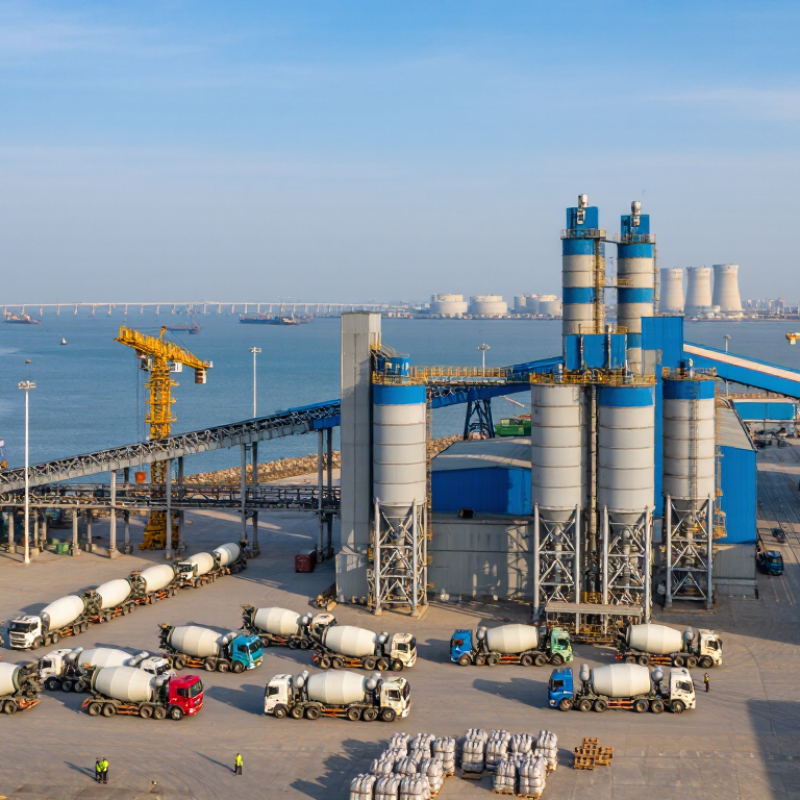
American concrete suppliers are not limited to ready-mix producers. They may provide cement, aggregates, admixtures, precast components, testing services, and mix-design support. For global buyers, this distinction matters. Wet concrete has a short delivery window and rarely travels efficiently across oceans. Exportable expertise matters more.
The U.S. Geological Survey reported about 91 million metric tons of domestic cement production in 2023. U.S. consumption reached approximately 120 million metric tons that year. These figures show strong domestic capacity, but they also reveal a limitation: American suppliers cannot meet every foreign project through material exports alone. Their wider role involves technical specifications, quality control, equipment integration, and durable mix design. The Global Cement and Concrete Association estimates that the world uses nearly 30 billion tonnes of concrete annually. American suppliers therefore contribute knowledge to a massive, locally produced material system. That distinction matters.
Tips: Global buyers should request verified test results, cement standards, aggregate grading, delivery terms, and climate-specific performance data. Compare ASTM-based documentation with local requirements before signing. Ask how long samples were cured. A small detail can change a major decision. The boundary between supplier and technical partner is not perfectly clear, and assuming otherwise can create costly gaps. USGS data and project conditions also change, so buyers should recheck figures before procurement.
Top American Concrete Suppliers for Global Buyers - Defining American Concrete Suppliers and Their Global Role
| Supplier Segment | Representative Product | Relevant U.S. Standard | Typical Global-Buyer Application | Typical Delivery Model | Global Procurement Considerations | Primary Global Role |
|---|---|---|---|---|---|---|
| Ready-Mixed Concrete Producers | Fresh concrete proportioned and batched for immediate placement | ASTM C94/C94M | Buildings, foundations, roads, bridges, and industrial slabs | Local or regional delivery by truck mixer; generally placed within the specified delivery window | Fresh concrete is usually not economical for overseas shipment; overseas buyers typically source it locally under U.S.-based specifications | Transfers batching, testing, and quality-control practices to international projects |
| Cement Manufacturers and Exporters | Hydraulic cement, including general-use and blended cement | ASTM C150/C150M; ASTM C595/C595M | Concrete production, mortar, precast products, and infrastructure works | Bulk vessel, pneumatic tanker, or moisture-protected bagged shipment | Buyers must confirm cement type, chemical composition, packaging, port facilities, and local conformity requirements | Provides a globally traded binder for concrete and cement-based construction materials |
| Aggregates Suppliers | Crushed stone, sand, gravel, and manufactured fine aggregate | ASTM C33/C33M | Concrete mixtures, asphalt systems, drainage layers, and structural fill | Truck, rail, barge, or bulk vessel depending on distance and volume | Particle-size distribution, cleanliness, absorption, durability, and local geology must be verified before purchase | Supplies the principal mineral component of concrete and supports regional material security |
| Precast Concrete Producers | Factory-cast beams, panels, pipes, barriers, and modular components | ASTM C94/C94M; project-specific ASTM and ACI requirements | Transit infrastructure, utility systems, buildings, marine works, and bridge construction | Flatbed, specialized heavy-haul trailer, rail, or breakbulk vessel | Dimensions, lifting points, weight, customs classification, transport permits, and site access require early coordination | Exports finished, quality-controlled components that reduce site labor and construction time |
| Prestressed Concrete Producers | Prestressed girders, piles, sleepers, and structural bridge elements | ASTM C1081; applicable ACI and project specifications | Bridges, rail systems, parking structures, marine facilities, and large-span buildings | Specialized heavy transport with engineered lifting and installation plans | High shipping weight, route restrictions, structural calculations, and erection equipment affect landed cost | Delivers high-performance structural systems for infrastructure projects |
| Dry-Mix and Bagged Concrete Suppliers | Preblended repair mortar, non-shrink grout, repair concrete, and installation mixes | ASTM C387/C387M; ASTM C1107/C1107M | Maintenance, repair, anchoring, small pours, and remote construction sites | Palletized bags, super sacks, or moisture-protected containers | Shelf life, humidity protection, bag labeling, mixing-water requirements, and language compliance are important | Offers practical, shelf-stable concrete solutions for international distribution |
| Fiber-Reinforced Concrete Suppliers | Concrete containing steel, synthetic, glass, or other reinforcing fibers | ASTM C1116/C1116M; ASTM C1609/C1609M | Industrial floors, tunnel linings, shotcrete, pavements, and precast components | Bulk fiber shipment, bagged admixture supply, or locally batched concrete using imported fibers | Fiber dosage, dispersion, residual strength, mixing sequence, and performance testing must be documented | Supports crack-control and toughness solutions while reducing reliance on conventional reinforcement in selected applications |
| Low-Carbon Concrete Solution Providers | Blended binders, supplementary cementitious materials, optimized mixtures, and recycled aggregates | ASTM C595/C595M; ASTM C618; ASTM C989/C989M; ASTM C1240 | Public infrastructure, green buildings, marine construction, and projects with embodied-carbon targets | Cementitious material shipment, local batching, technical licensing, or specification support | Performance validation, availability of supplementary materials, curing conditions, and environmental product documentation are essential | Helps global buyers reduce cement intensity and improve lifecycle sustainability |
| Procurement note: Concrete requirements should be confirmed against the project specification, destination-country regulations, climate exposure, testing procedures, packaging rules, and applicable customs documentation. Fresh ready-mixed concrete is primarily a local product, while cement, dry mixes, precast elements, aggregates, and technical services are more suitable for cross-border trade. | ||||||
Related Posts
-

How to Choose the Best Home Concrete for Your Project?
-

Why Concrete Masonry Is Essential for Durable Construction?
-

2026 How to Use Home Concrete for Your Next DIY Project?
-

2026 Top Trends in Home Concrete Design and Applications?
-
Top 10 Concrete Association Innovations Transforming the Industry?
-
Best American Concrete Suppliers for Global Buyers?