Choosing a Cigarette Display Rack is not simply a matter of finding the widest shelf. It is a practical decision involving visibility, security, durability, compliance, and daily staff use. A rack may look impressive in a catalogue, yet feel awkward behind a narrow counter. That difference matters.
Martin M. Pegler, a respected visual-merchandising authority, wrote, “The purpose of visual merchandising is to sell the merchandise.” His principle remains useful here, although a cigarette display also requires restraint. The product should be organized clearly without creating an aggressive or unsuitable presentation. Good design supports responsible retail operations.
Measure the counter first. Note the available width, depth, ceiling height, and staff movement around the checkout area. A crowded counter slows service. A poorly placed door can expose products, obstruct cleaning, or create unnecessary handling. Small details become daily frustrations.
Look for strong hinges, smooth edges, stable shelves, and materials that tolerate frequent wiping. Transparent panels can improve visibility, while lockable construction may support store security and local requirements. However, visibility is not the only goal. Age-related sales controls and advertising restrictions differ between jurisdictions, so the rack must fit the store’s compliance process.
Some choices remain imperfect. A compact rack saves space but limits capacity. A larger unit offers flexibility but can dominate the counter. The best Cigarette Display Rack is the one staff can use consistently, clean easily, and monitor responsibly. Appearance helps. Practical discipline matters more.
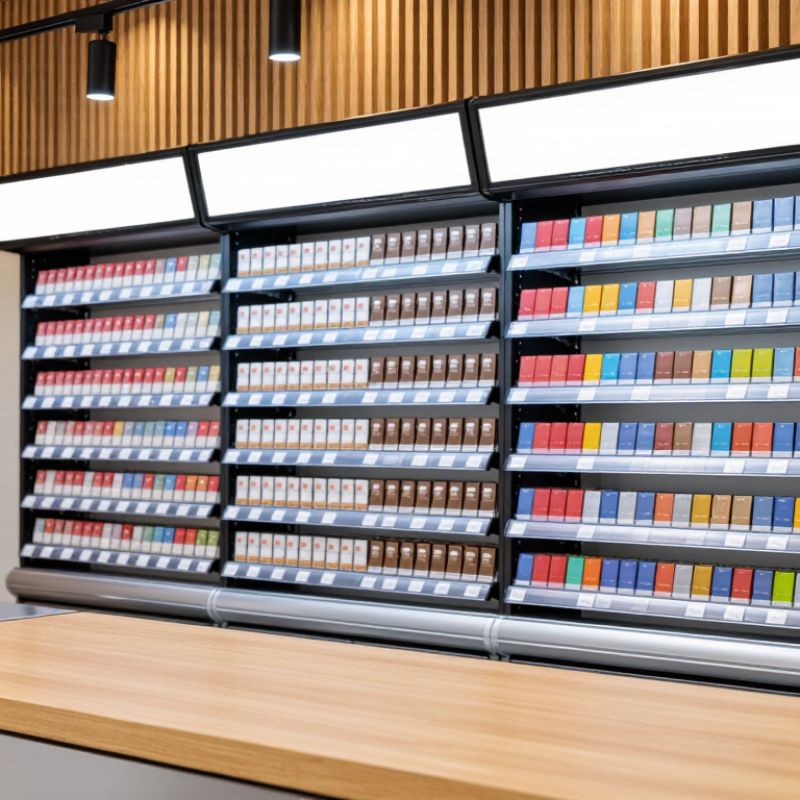
Store layout should guide movement without making customers feel crowded. Measure the available wall or counter space before selecting a cigarette display rack. Leave clear walking paths near entrances, checkout areas, and emergency exits.
A rack placed too close to the counter may slow service during busy hours. I have seen attractive displays become practical obstacles.
The rack should support secure storage, quick staff access, and clear product organization. Adjustable shelves can accommodate different package sizes and reduce empty-looking spaces.
Choose durable materials that tolerate frequent cleaning and daily contact. Smooth surfaces are easier to maintain.
Good lighting helps staff identify products accurately, but bright lights may create glare. Test the rack from the customer’s normal standing position.
Check current requirements with the appropriate authority before installation. The display should not encourage access by minors or interfere with staff supervision.
Keep high-demand items within easy reach, while maintaining an orderly arrangement. Stock records can reveal whether the rack is too small or unnecessarily large.
Customer flow changes. Monitor the area for one or two weeks, then adjust shelf height or rack position carefully. One small change can improve service.
However, appearance should never replace safety, compliance, or reliable daily operation.

Choosing a cigarette display rack depends on store layout, local rules, and staff routines. A rack should secure products, keep counts visible, and support required age checks. Local regulations may restrict visibility, dimensions, or placement. Confirm them before ordering. A practical fitting lesson is simple: measure the wall, counter, and customer path first. Attractive hardware cannot repair a crowded checkout area. Keep it practical.
Wall-mounted racks suit convenience stores with limited floor space. They use vertical areas and keep the checkout zone open. Lockable sliding-panel units add controlled access and reduce handling. They work well behind staffed counters. Countertop racks fit small shops or temporary service points. Choose one with stable feet and clear compartments. It should not block payment terminals or staff sightlines.
Floor-standing racks serve larger stores with a dedicated tobacco-service area. Adjustable shelves help staff manage changing inventory without rebuilding the unit. Rotating models can improve access, but moving parts need regular inspection. I once favored maximum capacity, yet that choice made replenishment slower. A smaller rack may perform better during busy hours. Use durable, easy-clean materials, rounded edges, and tamper-resistant locks. Keep records of cleaning, damage checks, and staff training. Reliable operation matters more than decoration.
Choosing a cigarette display rack starts with store measurements, not appearance. Measure wall width, counter depth, and customer clearance first. A rack that blocks staff movement creates daily friction. The NACS 2023 State of the Industry Report identified tobacco as about 25.7% of convenience-store in-store sales. That share justifies careful capacity planning, but overfilling still wastes space. Leave room for legal notices, secure storage, and staff access.
Capacity should match your sales rhythm and delivery schedule. Count product facings by category, pack format, and sales speed. Keep fast-moving items near eye level, while slower products can use upper or lower rows. Use clear dividers and readable labels. NielsenIQ retail studies consistently show that shoppers value easy navigation and quick decisions. A practical rack may hold 100 packs, but that number means little without accurate stock records. I once preferred maximum capacity; later, I found simpler organization reduced counting errors.
Tips: Choose adjustable shelves, strong metal construction, and lockable access where required by local regulations. Keep age-restricted products away from customer reach when rules demand it. Separate legal tobacco products from accessories to prevent visual clutter. Maintain a small reserve instead of filling every slot. Check the rack weekly for damaged labels, dust, loose fittings, and outdated signage. NACS reports also show that checkout convenience influences in-store purchasing, so the display should support fast service without encouraging unlawful access. Local requirements differ, and a neat layout is not automatically compliant.
How to Choose a Cigarette Display Rack for Your Store?
Security, accessibility, and regulatory compliance should guide every display rack decision. A suitable rack keeps regulated tobacco products behind the counter and limits unauthorized access. Choose a lockable cabinet with reinforced doors, concealed hinges, and durable internal shelves. A clear viewing panel helps staff identify stock without opening the cabinet repeatedly. Good visibility matters.
Accessibility should support staff, not unrestricted customer access. Shelves should remain reachable without ladders or awkward bending. Leave enough space around the cabinet for safe movement during busy periods. Adjustable dividers can separate products by size, category, or packaging format. However, excessive organization may slow service. Test the layout during a realistic rush.
Compliance requires careful local research. Rules may control product visibility, advertising, labeling, age verification, and display height. Requirements differ between countries, regions, and store types. Ask the relevant authority or a qualified compliance adviser before installation. Keep required notices visible, accurate, and easy to read. Never rely only on a supplier’s general claims. Record inspection dates, lock checks, and staff training in a simple log. This creates useful evidence when procedures are reviewed. I would also leave room for correction, because regulations and store layouts change.
Key design checks based on U.S. federal tobacco-retail rules and ADA accessibility benchmarks.
The chart compares measurable selection benchmarks: a 21-year minimum purchase age, a 48-inch maximum forward reach for accessible operable parts, and a 36-inch minimum accessible route width. Self-service tobacco displays are restricted in facilities that admit people under 21 under U.S. federal rules. Local requirements may be stricter.
Budget should follow selling conditions, not appearance alone. The NACS State of the Industry Report 2024 found that tobacco products generated about 25% of convenience-store in-store sales in 2023, while contributing roughly 8% of gross margin dollars. This gap matters. A rack must protect stock without consuming money needed for higher-margin categories.
For a busy store, powder-coated steel usually offers better long-term value than thin painted metal. It resists dents, supports heavy cartons, and cleans quickly near checkout counters. Clear panels improve visibility, but they can scratch and look tired sooner. Measure the counter area, door swing, lighting, and staff reach before ordering. A 60-centimetre rack placed badly still wastes space. I would avoid choosing only by the lowest quote. That assumption often fails after loose hinges, broken locks, or difficult cleaning appear. Use a simple five-year cost estimate: purchase price, installation, repairs, replacement parts, and cleaning time. Follow local requirements for age-restricted product displays and secure access.
Tips: Check welds and hinge movement in person. Ask for corrosion resistance details. Keep a spare key or approved access method. Wipe the rack daily with a mild cleaner, then inspect screws weekly. Record damage with photos. Small neglect becomes expensive. NACS data supports treating this fixture as a sales tool, but sales data alone cannot measure staff frustration or poor access. That part needs honest observation.