10 Essential Tips for Choosing the Right Mixed Concrete
Choosing the right mixed concrete for your project can be challenging. With so many options available, making a decision can feel overwhelming. Whether you are building a patio, driveway, or foundation, selecting the right mix is crucial for durability and strength.
Understanding the specific needs of your project will guide you in selecting the right mixed concrete. Factors such as weather, load-bearing requirements, and finish all impact your choice. It's important to consider how each element affects the final outcome. A mix that works for one application may not suit another.
Reflect on your priorities. Are you looking for a quick set or long-lasting performance? Think about your budget as well. Finding the balance between cost and quality is vital. Mixed concrete can vary widely in pricing, so do your research. This process will empower you to make an informed decision.
Understanding the Types of Mixed Concrete Available in the Market
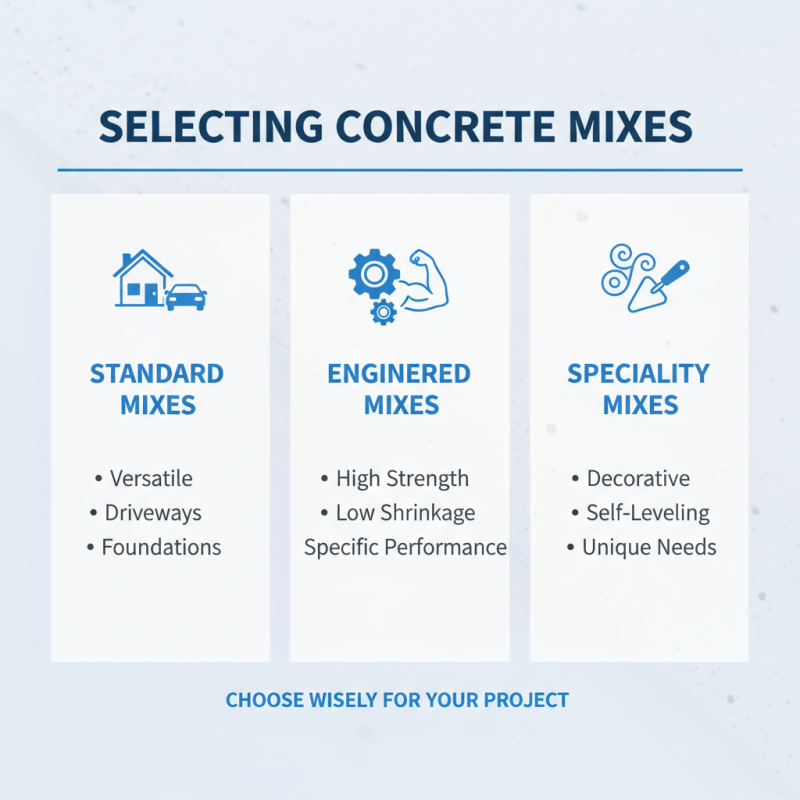
When selecting mixed concrete, understanding the different types available is crucial. There are standard mixes, engineered mixes, and specialty mixes. Each type serves unique purposes. For instance, standard mixes are versatile and commonly used for driveways and foundations. Engineered mixes offer specific performance characteristics, such as high strength or low shrinkage. Specialty mixes cater to specific needs, like decorative concrete or self-leveling options.
It's important to consider project requirements carefully. Think about the environment where the concrete will be used. Will it be exposed to extreme weather? This could influence your choice. Not all mixes perform well under harsh conditions. You might find some mixes don’t cure well in certain climates. This could lead to cracking or other issues down the line.
Testing samples can provide insight into how a mix performs. Be aware that sometimes mixes don't meet expectations. Reflect on past experiences to guide your choices. The right mixed concrete can make a significant difference in durability and aesthetics. Make informed decisions to ensure success on your project.
Evaluating the Specific Strength and Durability Requirements for Your Project
When choosing mixed concrete for your project,
strength and durability are key factors.
Understand the specific demands your project requires. Different applications may need
various levels of compressive strength. A driveway may not need the same durability
as a foundation. Get familiar with the terms involved.
3,000 psi may work for sidewalks, but
consider higher strengths for heavy loads.
Durability is about more than just strength.
It includes resistance to environmental factors. If your area has freeze-thaw cycles,
consider additives that improve performance. Cracks
can develop if the concrete lacks the proper resilience. Take time to assess your
local climate and soil conditions. You may find that what works in one area
doesn't apply to another.
Always consult with a professional.
They can help identify your specific project needs. Misjudging these factors
can lead to costly mistakes. Test samples are helpful, but they may not replicate real conditions fully.
Reflect on the potential longevity of your concrete. Will it stand the test of time?
Being thorough in your evaluation will pay off in the end.
Considering Workability and Setting Time for Different Applications
Choosing mixed concrete involves understanding workability and setting time for various applications. Workability is crucial for placing and finishing concrete. It is affected by water-cement ratio, aggregate type, and admixtures. According to the American Concrete Institute (ACI), a good workability score is between 5 to 8 inches on the slump test. A low slump indicates poor workability, while a high slump can lead to segregation.
Setting time is equally important. For projects requiring quick turnaround, rapid-setting mixtures are beneficial. They can set in as little as one hour. The National Ready Mixed Concrete Association (NRMCA) reports that standard set concrete usually takes about 4 to 6 hours. In contrast, for foundations or large slabs, extended set time allows for proper adjustments. Balancing these factors requires careful consideration of project needs and environmental conditions. Misjudging the right mix can lead to costly delays and structural issues.
It is common for contractors to overlook the effects of temperature and humidity on workability and setting times. High temperatures may accelerate setting time, increasing the risk of cracking. Understanding these variables is key to achieving desired results. Regular monitoring of ambient conditions is advisable to ensure the right adjustments are made.
10 Essential Tips for Choosing the Right Mixed Concrete - Considering Workability and Setting Time for Different Applications
| Application |
Workability |
Setting Time (hours) |
Recommended Mix Ratio |
| Structural Concrete |
High |
4-6 |
1:2:4 |
| Pavement |
Moderate |
3-4 |
1:3:6 |
| Decorative Concrete |
High |
2-3 |
1:2.5:4.5 |
| Foundation |
Low |
5-7 |
1:2:3 |
| Repair Work |
Moderate |
1-2 |
1:1.5:3 |
Assessing the Quality of Raw Materials Used in Mixed Concrete
Choosing the right mixed concrete starts with understanding its raw materials. The quality of cement, aggregates, and water directly influences the final product. Inspect each component carefully. Look for consistency and minimal impurities in the aggregates. Even small stones can affect the strength. Knowing where your materials come from is key. Different sources yield different quality.
Cement should be fresh and free from lumps. Aged or improperly stored cement can weaken the mixture. Conduct tests for its properties if possible. Water quality matters too. Clean, potable water is ideal. Avoid using water from questionable sources. Not all projects require the same mixture. Some applications need stronger concrete, while others are more forgiving.
Reviewing and assessing raw materials is essential. Sometimes, people overlook this step. They assume all materials are equal. Big mistake. It's important to double-check supplier claims. Ask questions and don't hesitate to seek advice. Testing samples before large pours can save time and money later. Remember, quality concrete starts with quality ingredients.
Reviewing Supplier Reputation and Delivery Logistics for Concrete Choices
When selecting mixed concrete, evaluating the supplier's reputation and delivery logistics is crucial. A reliable supplier can significantly impact your project. Look for online reviews and testimonials. They provide insight into past customer experiences. Recommendations from friends or colleagues also help build trust. Check for professional certifications too. They indicate a commitment to quality.
Delivery logistics is another key aspect. Understand the supplier's delivery capabilities. Do they have a reliable fleet? Delays in delivery can stall your projects. Ask about their schedule. Regular communication can prevent misunderstandings. Also, confirm if they can accommodate different project scales. Flexibility is often essential for timely completion.
Always consider the supplier's location. A nearby supplier can reduce transportation time and costs. However, don’t ignore quality for proximity. A poor product can lead to more issues down the line. Inconsistent batches can cause problems for your concrete work. Make an informed decision that balances reputation and logistics effectively.