How to Choose the Right American Concrete for Your Project?
Choosing the right American concrete is essential for any construction project. In the U.S. alone, the concrete industry generates over $100 billion annually, highlighting its significance. However, the selection process can be challenging and often misunderstood. According to Dr. Emily Thompson, a leading expert in concrete technology, “Selecting the proper type of American concrete can make or break your project.”
Various factors influence the choice of American concrete. These include the project’s scope, location, and environmental conditions. Not all concrete mixtures are suitable for every application. Understanding specific properties, such as strength and durability, often requires professional guidance. Missteps can lead to delays and increased costs.
Despite abundant resources, many individuals overlook critical details. They may assume all concrete is the same, which is far from true. Grasping the nuances of American concrete can significantly enhance project outcomes. As professionals recommend, always conduct thorough research and seek expert advice before making a decision. Inadequate knowledge can lead to unwanted surprises later on.

Understanding the Different Types of American Concrete
When selecting the right type of American concrete for your project, understanding the various options is crucial. There are several types of concrete, including standard, high-strength, and lightweight concrete. For example, standard concrete typically has a compressive strength of 2,500 to 5,000 PSI. This makes it suitable for sidewalks and driveways. High-strength concrete, on the other hand, can reach up to 8,000 PSI or more. It’s often used in high-rise buildings and bridges due to its durability.
Lightweight concrete, which has a density of approximately 90 to 115 pounds per cubic foot, is another option. Its benefits include reduced weight and enhanced insulation properties. Reports indicate that using lightweight concrete can reduce overall project costs by up to 25%. However, lighter concrete may not always offer the strength needed for certain applications. Thus, it’s important to assess project requirements carefully before choosing.
Understanding these types can help you avoid potential pitfalls. For instance, opting for high-strength concrete when not needed can lead to overspending. Alternatively, using standard concrete in harsh conditions may result in cracks and early failures. Therefore, careful consideration of the specific needs of your project is essential to avoid costly mistakes.
Factors to Consider When Selecting Concrete for Your Project
Choosing the right concrete for your project involves various factors that can significantly impact your outcomes. Strength is a primary consideration. The compressive strength of concrete is typically measured in pounds per square inch (psi). For residential projects, concrete with 2,500 to 3,000 psi is often sufficient. However, for commercial projects, a strength of 4,000 psi or higher is recommended. According to a report by the American Concrete Institute, over 70% of concrete used in construction meets or exceeds 4,000 psi.
Durability is another crucial factor. Concrete should withstand environmental factors like freeze-thaw cycles or moisture. Selecting a mix with additives can enhance durability. In fact, studies show that concrete designed with silica fume can increase durability by up to 30%. Examining local climate conditions can help determine the appropriate type of concrete for your project.
Cost can be a deciding factor too. Budget constraints often force compromises. It's common for projects to focus on the lowest initial cost without considering long-term durability. This short-sighted approach can lead to increased maintenance costs later. Balancing upfront expenses with long-term benefits is essential. Each decision impacts the project's overall success, requiring careful thought and evaluation.
Evaluating the Properties and Strengths of Various Concrete Mixes
Choosing the right concrete mix for your project is crucial. Various mixes offer different properties and strengths. For example, standard concrete features a mix of cement, water, sand, and aggregates. This combination provides good strength for general construction. It often supports buildings and driveways.
Higher-performing mixes, such as reinforced concrete, are essential for structures that endure heavy loads. Reinforcement, typically with steel bars, adds tensile strength. This makes it suitable for beams and slabs. On the other hand, lightweight concrete is great for insulation. It has different aggregates, making it easier to handle but typically less strong.
Evaluating these mixes is not always straightforward. Some projects require strength, while others prioritize weight or insulation. Testing a small sample before full-scale use can save time and money. Reflection on past projects reveals that not all mixes perform as expected. Understanding the specific needs and properties of each option enhances project outcomes. Consideration of these factors can lead to better choices.
How to Choose the Right American Concrete for Your Project?
| Concrete Type |
Compressive Strength (psi) |
Workability |
Recommended Use |
| Standard Concrete |
2500 - 5000 |
Good |
Foundation, Slabs |
| High-Strength Concrete |
5000 - 10000 |
Fair |
High-rise Buildings, Bridges |
| Lightweight Concrete |
2600 - 4000 |
Excellent |
Roofing, Insulation |
| Fiber-Reinforced Concrete |
3000 - 8000 |
Good |
Industrial Floors, Pavements |
| Pervious Concrete |
1500 - 3000 |
Fair |
Parking Areas, Sidewalks |
Common Applications for Different Types of American Concrete
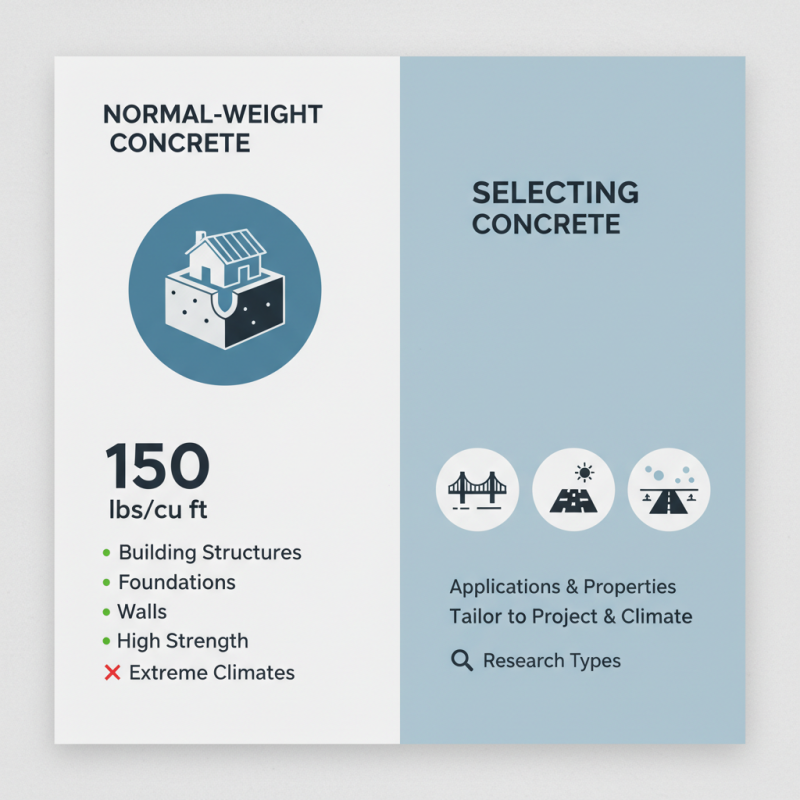
When selecting concrete for a project, it's essential to understand the common applications and properties of various types. For example, normal-weight concrete is widely used in building structures, as it typically weighs about 150 pounds per cubic foot. This type shows great strength, ideal for foundations and walls. However, it may not always be suitable for every climate.
Lightweight concrete is another option. It weighs significantly less, averaging 110 to 120 pounds per cubic foot. This makes it a preferred choice in construction where reducing weight can minimize structural stress. However, lightweight concrete may not achieve the same compressive strength as its heavier counterpart, which raises concerns in load-bearing applications.
For more specialized needs, there are high-strength and high-performance concretes. These types can withstand extreme conditions. They can resist chemical attacks, which is crucial in environments like wastewater treatment facilities. However, the higher cost of these materials and the need for skilled labor to install them can lead to project budget overruns. Each concrete type has its pros and cons, making careful choice and planning critical for the project's success.
Consulting with Professionals: When to Seek Expert Advice
When embarking on a concrete project, consulting professionals can be invaluable. They offer insights that may not be apparent to novices. Knowing when to seek expert advice is crucial. Complex projects, like commercial builds, often require specialized knowledge. A good concrete consultant understands local regulations. They also grasp the nuances of material choices.
**Tips:** Always prepare questions in advance. A clear list helps the consultant address your specific concerns. Don't hesitate to share your project goals. Transparency fosters collaboration. Sometimes, they may suggest alternatives you hadn't considered. This can enhance your project's outcome significantly.
Many DIY enthusiasts overlook details. They may underestimate the importance of proper mixing and curing techniques. A minor error can lead to costly repairs later. Listening to experienced professionals can save you time and money down the line. Value their input; they have likely seen common pitfalls before.
**Tips:** Take notes during consultations. These can help you remember key points. Review them before making decisions. It’s also wise to get a second opinion on significant choices. Different perspectives can uncover unforeseen issues.