Planet
10 Best Canvas Awnings for Outdoor Spaces?
Choosing the right shade can transform a hot patio into a comfortable outdoor room. This guide explores 10 Best Canvas Awnings for Outdoor Spaces, based on practical design and performance considerations. Canvas Awnings can soften harsh sunlight, protect outdoor furniture, and create a more inviting entrance or seating area.
The selections consider fabric weight, UV resistance, water repellency, frame strength, installation methods, and maintenance needs. A sturdy awning should handle regular outdoor exposure without sagging, fading quickly, or collecting water after a light shower. However, no canvas performs perfectly in every climate. Coastal air, strong winds, and prolonged dampness can shorten its service life, even when the product appears well made.
Small details matter. A narrow window awning may need only simple brackets, while a wide patio cover requires careful measurements and stronger support points. Look closely at stitching, reinforced edges, operating hardware, and warranty terms. These features often reveal more than attractive product photographs.
Not every choice will suit every home.
Personal experience also matters. A retractable model may offer flexible shade, but its moving parts need occasional cleaning and inspection. A fixed awning can feel more dependable, although it provides less seasonal control. This overview aims to compare realistic strengths and weaknesses, helping homeowners choose canvas shade with clearer expectations, safer installation decisions, and better long-term value.
Canvas Awning Basics and Main Types for Outdoor Spaces
Canvas Awning Basics and Main Types for Outdoor Spaces
A canvas awning is a fabric-covered structure that blocks sun, light rain, and glare. Modern canvas usually means solution-dyed acrylic or coated polyester. These fabrics resist fading better than untreated cotton. Check the fabric weight, water resistance, seam quality, and ultraviolet rating before buying. Small details matter.
Fixed awnings provide constant shade above windows, doors, or patios. They suit sunny walls and need little daily adjustment. Retractable awnings offer more control, especially when evening sunlight changes direction. Drop-arm styles shade narrow windows, while freestanding canopies cover seating away from buildings. For coastal areas, corrosion-resistant frames deserve attention.
The U.S. Department of Energy reports that window awnings can reduce solar heat gain by up to 65% on south-facing windows and 77% on west-facing windows. The actual result depends on window direction, projection, fabric, and local weather. The National Fenestration Rating Council uses solar heat gain coefficient, or SHGC, to compare window performance. An awning works outside that window system, so measurements should consider both parts.
I have found that deeper shade is not always better. Wind can turn a large awning into a noisy, stressed structure. A modest slope may also leave rainwater near the wall. Review local wind exposure, mounting strength, drainage, and seasonal maintenance. I once underestimated afternoon glare. That mistake changed the final placement.
| Rank | Canvas Awning Type | Best For | Typical Projection | Common Canvas Construction | Main Benefits | Important Limitations | Maintenance Level | Recommended Placement |
|---|---|---|---|---|---|---|---|---|
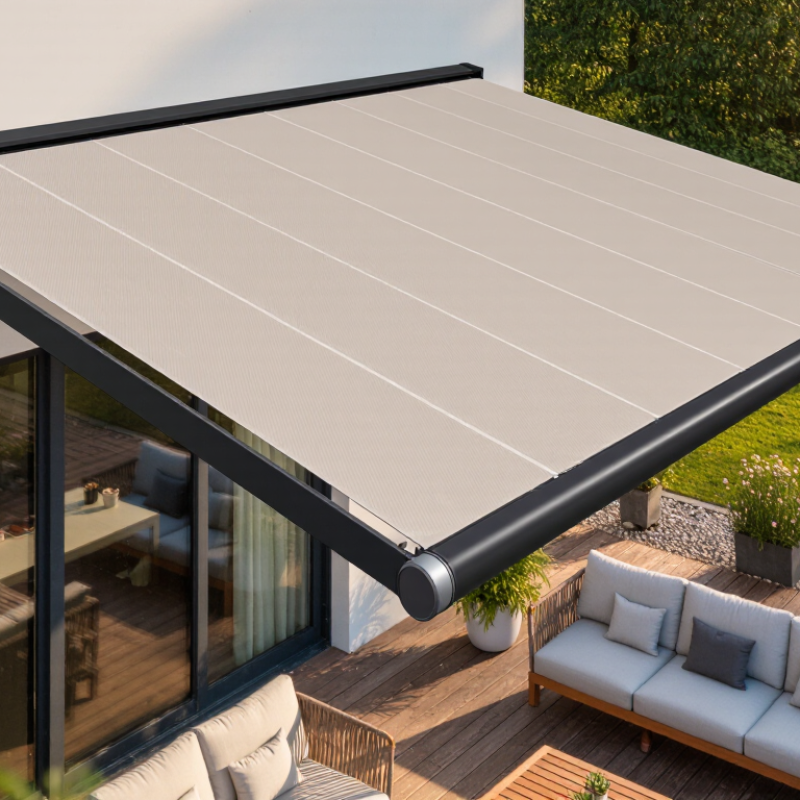
| 1 | Retractable Patio Awning | Flexible shade over decks, patios, and balconies | Approximately 1.5–3.5 m (5–11.5 ft) | Solution-dyed acrylic or coated outdoor fabric over a folding-arm frame | Extends when shade is needed and retracts to preserve daylight; covers a broad seating area | Should usually be retracted during strong wind, heavy rain, or snow; requires secure wall mounting | Moderate | Exterior walls above patios, terraces, and outdoor dining areas |
| 2 | Fixed Wall-Mounted Patio Awning | Permanent weather and sun protection | Approximately 1.2–3 m (4–10 ft) | Heavy-duty acrylic, polyester canvas, or PVC-coated fabric on a rigid frame | Stable, continuously available shade; can help protect doors, windows, and outdoor furniture | Provides less flexibility than a retractable model and may reduce winter sunlight | Moderate | Patio walls, entrances, outdoor kitchens, and covered walkways |
| 3 | Window Awning | Reducing solar heat and glare at windows | Approximately 0.5–1 m (1.5–3.3 ft) | Outdoor acrylic or polyester canvas with a compact metal or aluminum frame | Helps shade glass, improves visual comfort, and adds architectural detail to a façade | Limited floor coverage; must be sized to avoid obstructing window operation | Low | Above living-room, bedroom, kitchen, or office windows |
| 4 | Door Canopy Awning | Protecting entry doors from sun and precipitation | Approximately 0.6–1.2 m (2–4 ft) | Coated canvas or acrylic fabric supported by a compact frame | Creates a sheltered threshold and can reduce rain reaching the doorway | Usually covers only the entrance zone; drainage and wall flashing need careful planning | Low | Front doors, back doors, service entrances, and garden gates |
| 5 | Drop-Arm Awning | Windows requiring adjustable vertical or angled shade | Approximately 0.6–1.2 m (2–4 ft) | Outdoor acrylic canvas with pivoting side arms | Offers adjustable shading and can be positioned to control low-angle morning or afternoon sun | Side arms may project into circulation space; exposed mechanisms need periodic inspection | Low | Windows, narrow balconies, shopfront-style openings, and façades |
| 6 | Dome Awning | Small windows and entrances where appearance matters | Approximately 0.5–0.9 m (1.5–3 ft) | Shaped acrylic or polyester canvas stretched over a curved frame | Provides partial protection from sun and light rain while covering the top and sides of an opening | Generally fixed and less suitable for large outdoor seating areas | Low | Windows, apartment entrances, cafés, and compact storefronts |
| 7 | Quarter-Barrel Awning | Compact façades needing a curved profile | Approximately 0.6–1.2 m (2–4 ft) | Canvas or acrylic fabric fitted over a quarter-cylinder support frame | Creates a distinctive rounded form and can shade the upper portion of doors or windows | Usually offers less projection than a patio awning and is not retractable | Low | Entryways, small windows, kiosks, and narrow exterior walls |
| 8 | Pergola or Canopy Canvas Awning | Large outdoor rooms and freestanding structures | Approximately 2–5 m (6.5–16.5 ft), depending on the structure | Breathable acrylic or polyester canvas attached to beams, tracks, or tension points | Can shade larger areas and integrate with pergola posts, outdoor kitchens, or dining zones | Needs a properly engineered support structure and adequate fabric drainage | Moderate | Pergolas, poolside areas, garden seating, and outdoor dining spaces |
| 9 | Freestanding Canopy Awning | Outdoor areas without a suitable mounting wall | Approximately 2–4 m (6.5–13 ft) | Outdoor canvas or acrylic fabric over steel, aluminum, or timber supports | Can be positioned independently of the building and may be relocated or seasonally stored | Requires stable anchoring; lightweight models can be vulnerable to wind if unsecured | Moderate | Gardens, patios, pool decks, event areas, and rental properties |
| 10 | Sail-Style Canvas Awning | Modern, flexible shade arrangements | Commonly 3–6 m (10–20 ft) across, depending on the shape | UV-resistant, water-repellent outdoor fabric tensioned between anchor points | Works well for irregular spaces and can create overlapping shade zones with multiple sails | Needs strong anchor points, correct tension, and a slope for rainwater runoff | Moderate | Courtyards, playgrounds, gardens, pool areas, and contemporary patios |
| Selection note: For most outdoor spaces, solution-dyed acrylic canvas is valued for color retention, UV resistance, and resistance to mildew when properly maintained. Polyester canvas is often lighter and more economical, while coated fabrics can offer greater water resistance. Always check the fabric manufacturer's cleaning instructions, provide adequate drainage, and retract or secure fabric awnings during severe weather unless the system is specifically engineered for those conditions. | ||||||||